Panerai
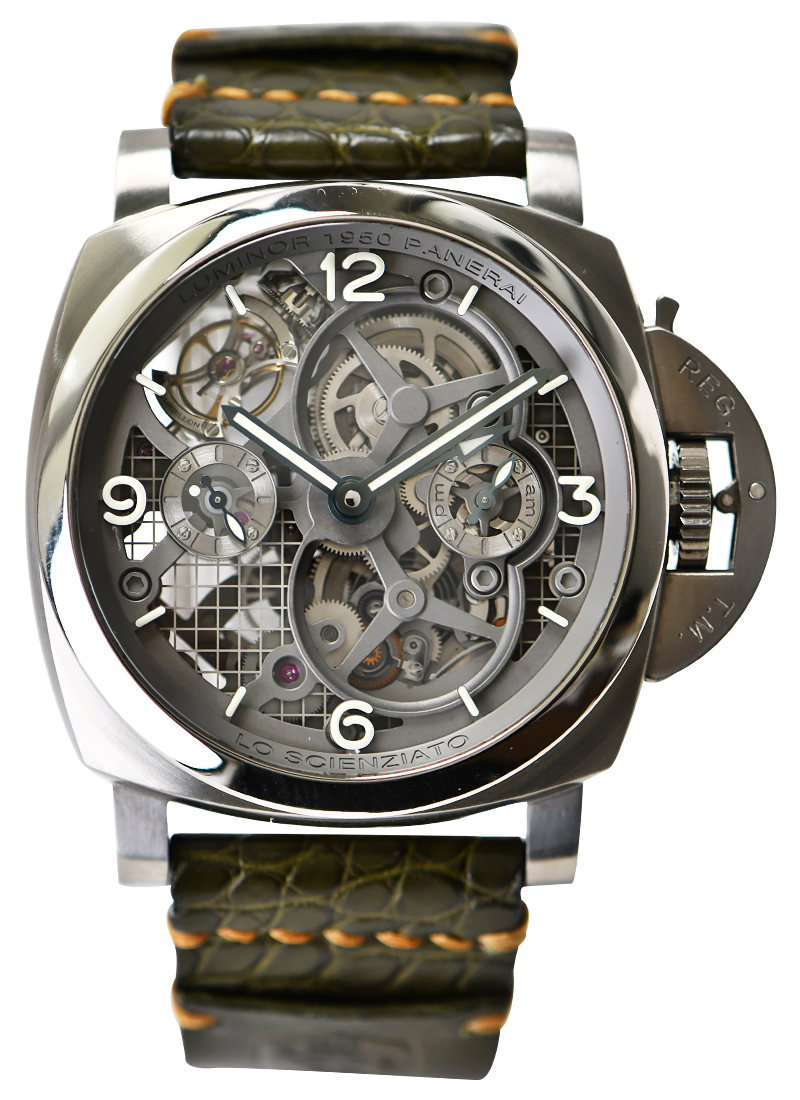
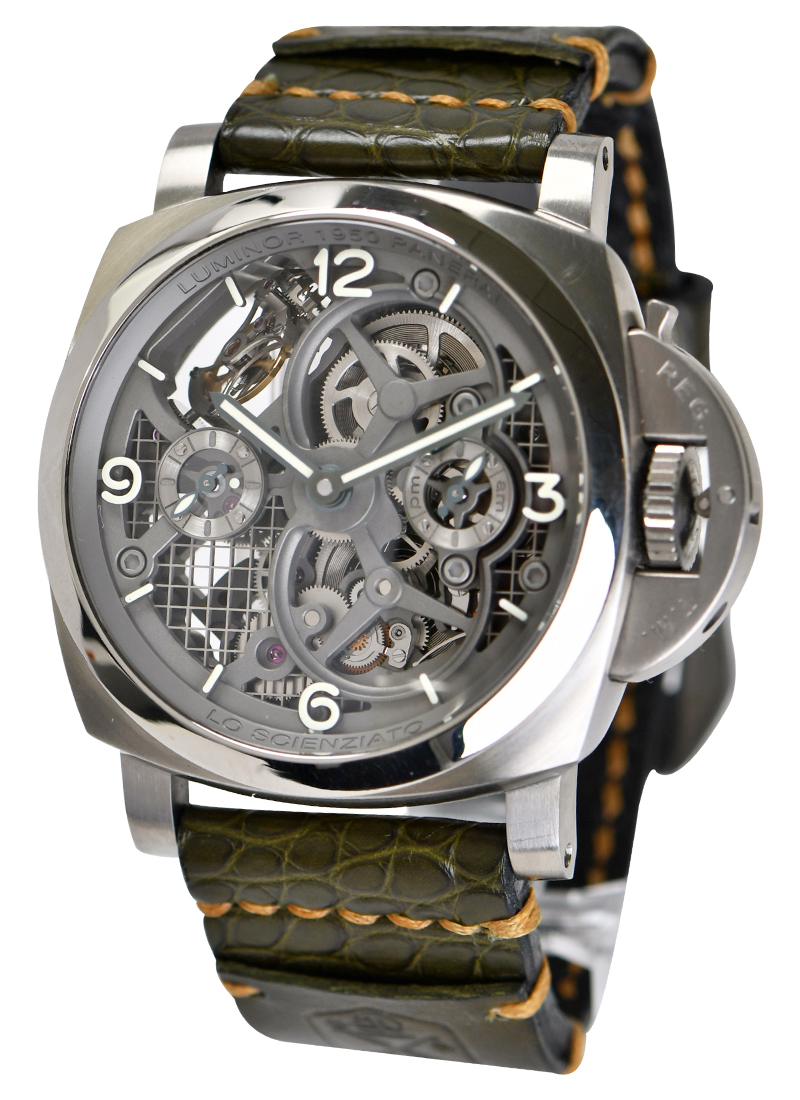
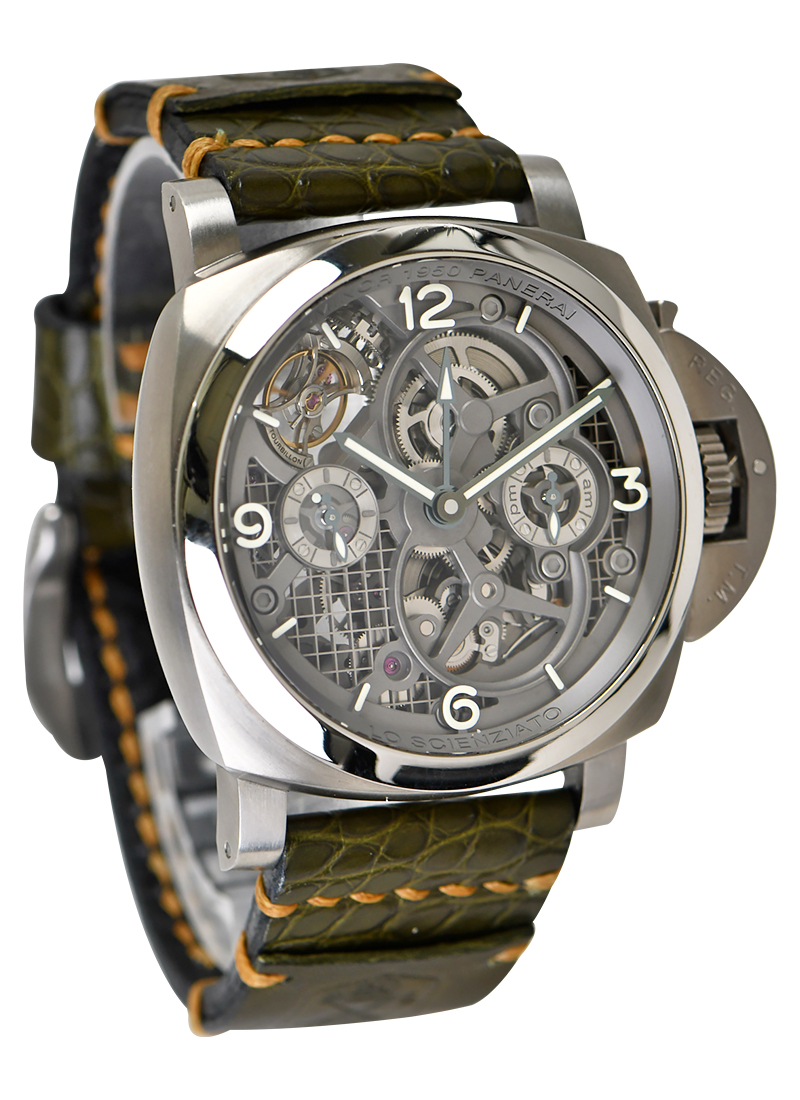
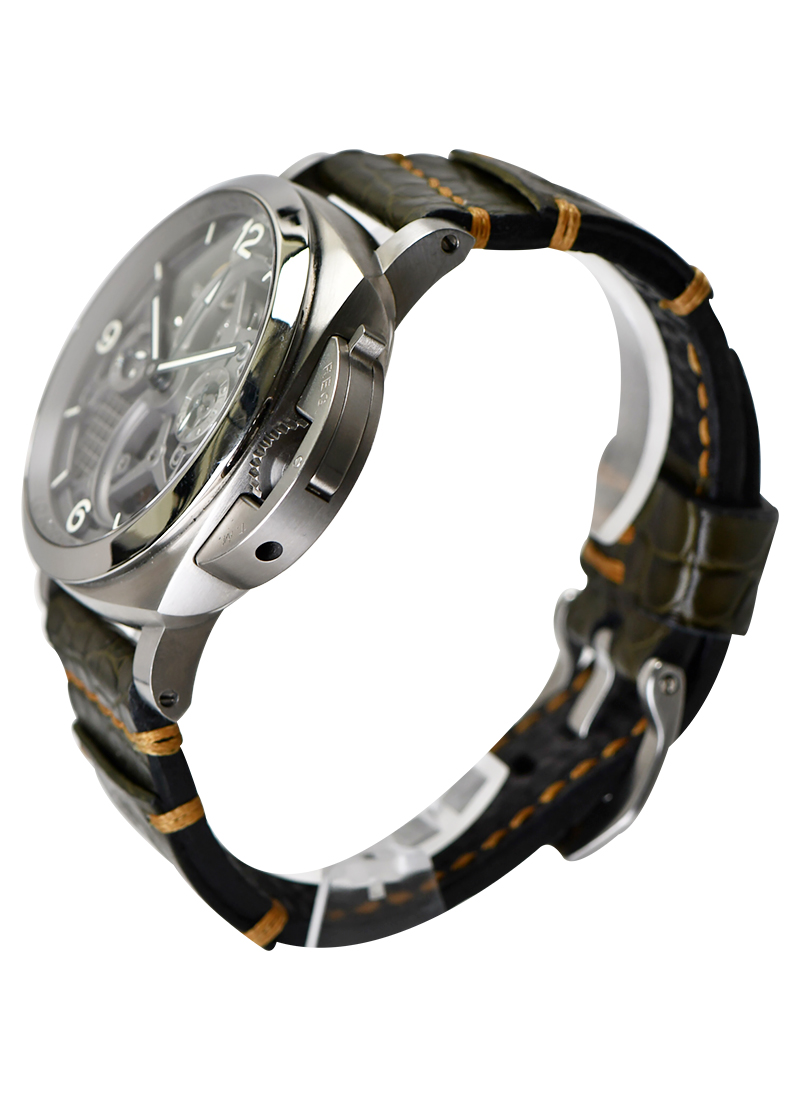
Lo Scienziato Luminor 1950 Tourbillon GMT Titanio in Brushed Titanium
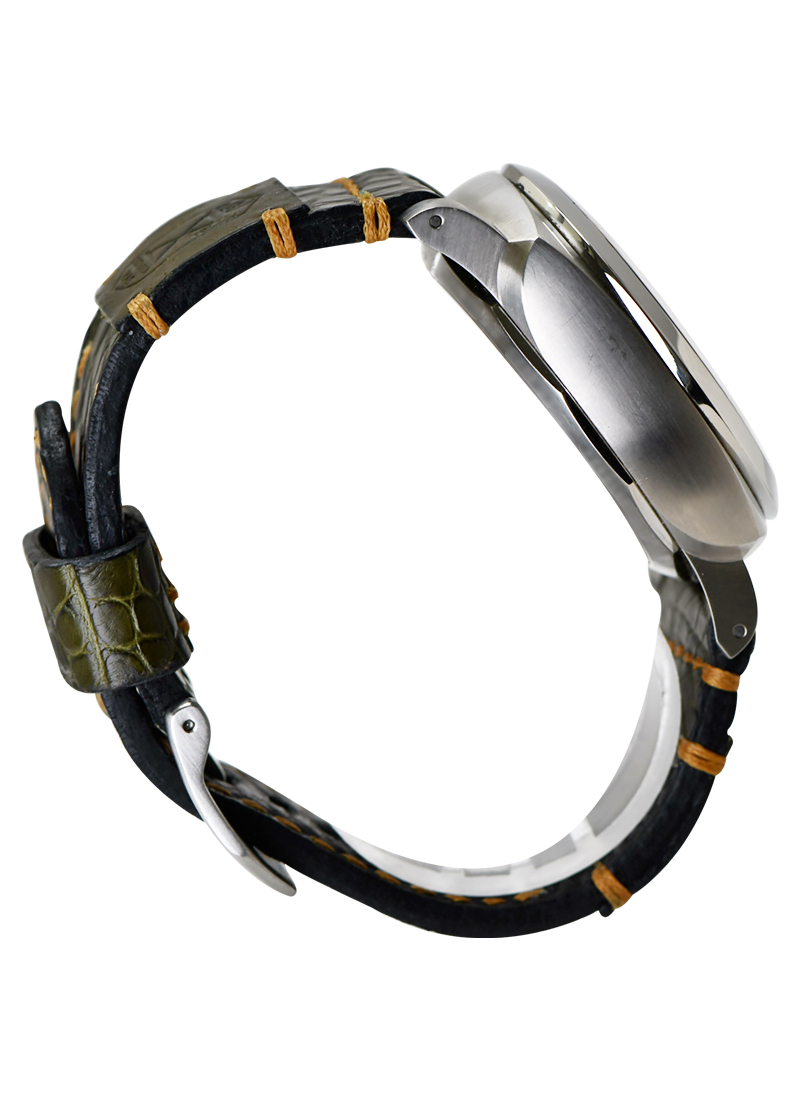
on Brown Leather Strap with Skeleton Dial (Non OEM strap and buckle) Limited to 150
| Model #: | PAM00578 |
| Case Material: | Brushed Titanium |
| Case Size: | 47mm |
| Movement: | Manual |
| Dial: | Skeleton Dial |
| Bracelet: | Brown Leather |
| Year: | Open |
| Retail Price: | $149,000 |
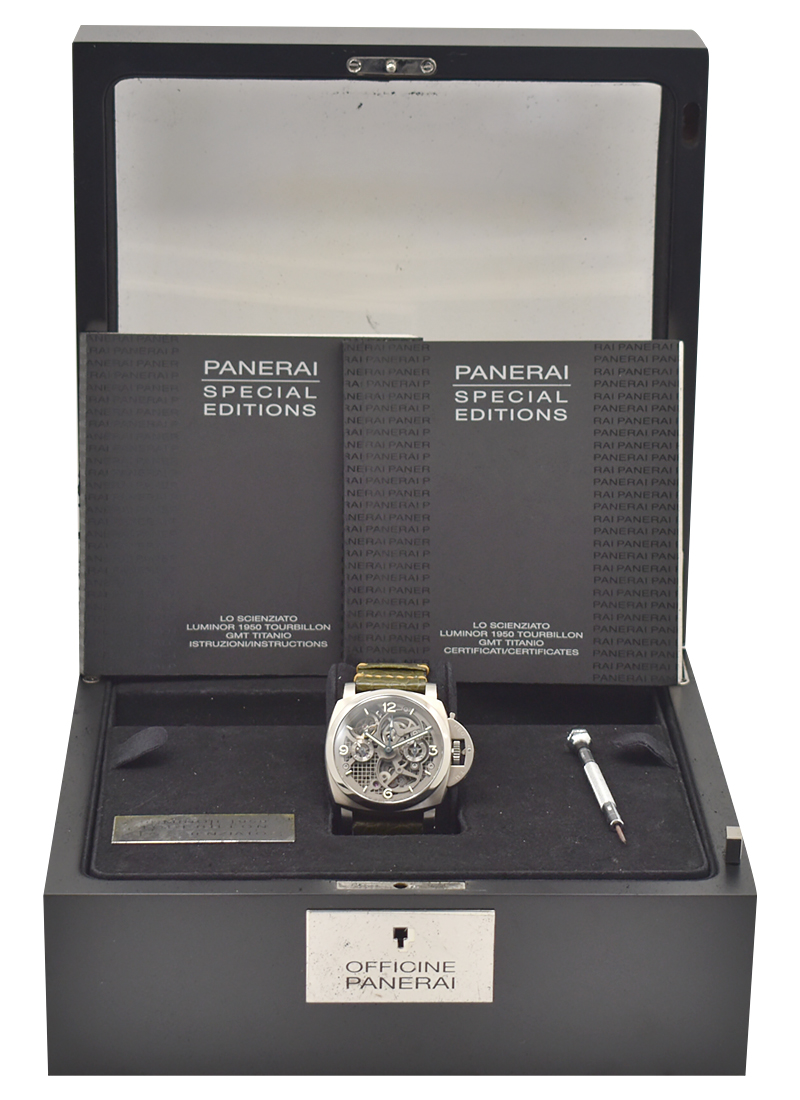
Condition: This watch is in Mint Minus Condition.* Complete with Box and Papers.
$ 59,500
* We have graded this watch to be 93% - there are small scuffs that can be polished
 whatsapp
Description
Limited to only 150 examples, the Panerai PAM 578 Lo Scienziato Luminor 1950 Tourbillon GMT Titanio released for SIHH 2016 once again captivated Panerai's loyal aficionados by unveiling a new case-making technique - direct metal laser sintering (DMLS). Panerai utilizes the DMLS to construct the case layer by layer by means of a fibre optic laser and eventually merge the successive layers together. Coupled with the choice of titanium, the final case weights only 98 grams despite its sizable diameter at 47mm.
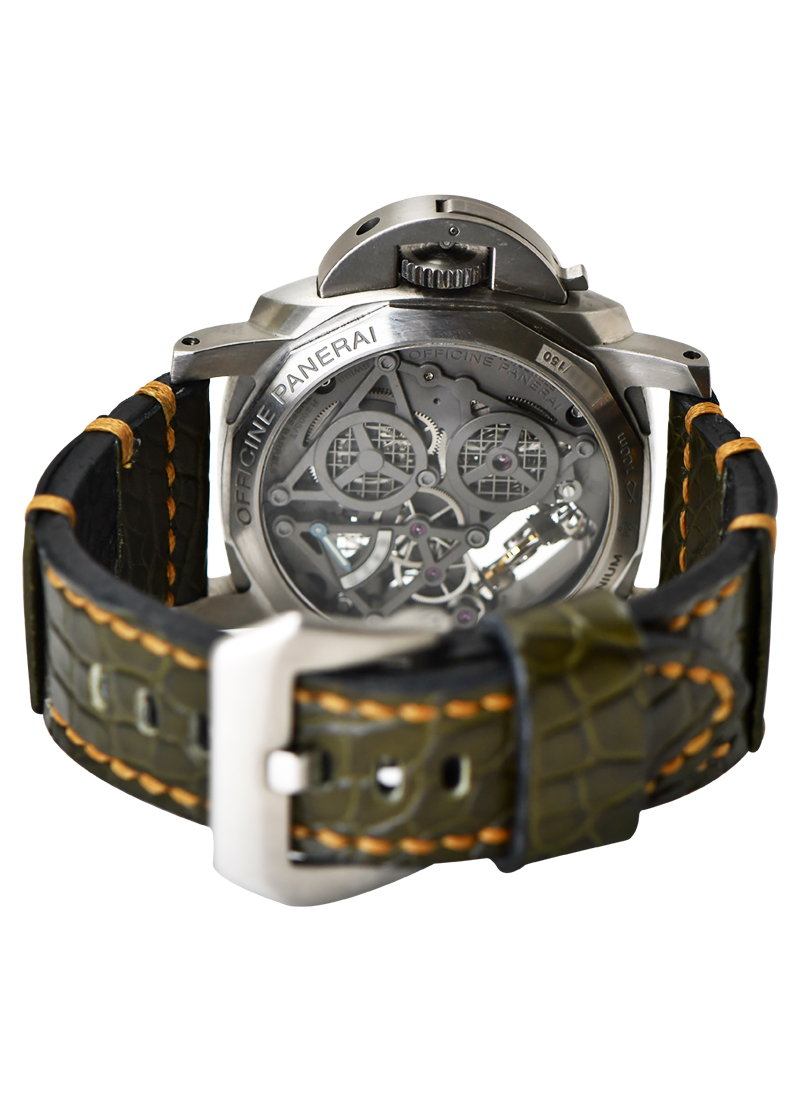
PAM578 is fitted with the P.2005/T manual winding movement, a version of the skeletonised P.2005/S modified with titanium plates and bridges. The rest of the movement remains unchanged and it sports an impressive number of features including a 30-second rotating tourbillon, a power reserve display and a second time zone indication. The three mainspring barrels store enough energy to power the watch for as long as 6 days without compromising its accuracy.
For full view on the PAM578, the movement is displayed in full view, and can be observed from the dial side. The tourbillon cage makes two full revolution per minute.
The process used to manufacture the case is known as direct metal laser sintering (DMLS). This is an additive manufacturing technique that uses a Yb (Ytterbium) fibre laser fired into a bed of powdered metal, aiming the laser automatically at points in space defined by a 3D model, melting or rather, welding the material together to create a solid structure. DMLS was developed by the EOS in Munich, Germany. The technology is quite new, in the mid-1990s, with applications in aerospace, automotive and rapid prototyping.